NVIDIA at $5 Trillion: How the Market Priced the AI Platform
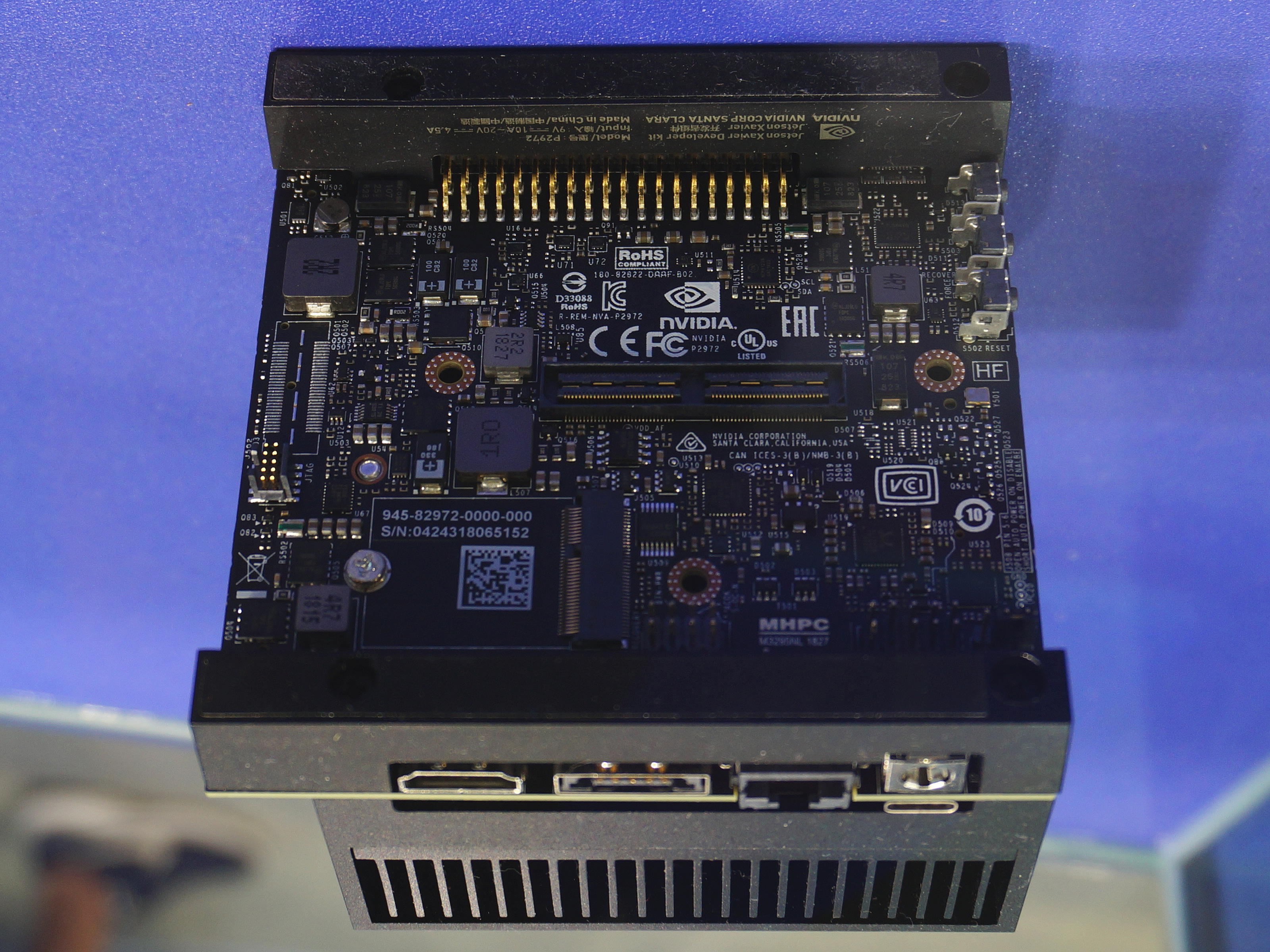
Image credit: Solomon203, CC BY-SA 4.0, via Wikimedia Commons.

NVIDIA at $5 Trillion — How to Think About the Valuation
The news, clearly stated: on October 29, 2025, NVIDIA’s market value crossed $5 trillion for the first time. At ~24.53B diluted shares (post-split), that implies about $203.8 per share at the moment of first touch.
What follows is a valuation explainer for builders and investors: not hype, not doom — a practical map of the drivers the market is paying for, the constraints that can dent the story, and the few variables that matter most over the next 12–24 months.
1) What changed: from “chip vendor” to AI platform & capacity allocator
Two years ago, NVIDIA looked like a hyper-growth chip company. Today, it prices like an AI compute platform with characteristics the market loves:
- Composability and lock-in. CUDA + libraries + NIMs/AI Enterprise turn raw GPUs into a software platform. The result: higher switching costs and better pricing power than a bare-metal supplier.
- System-level control. Blackwell-class systems (GB200 NVL/Grace), NVLink, InfiniBand/Ethernet, and rack-scale integration push NVIDIA up the value chain — from components to full AI factories.
- Allocation power. When supply is tight (HBM, CoWoS-L packaging), allocation is strategy. NVIDIA isn’t only selling parts; it’s allocating capacity across a small set of mega-buyers running multi-year programs.
The market’s signal at $5T is: “We believe the AI datacenter buildout is a multi-year program and NVIDIA keeps the platform edge long enough to harvest it.”
2) What the current numbers say (and don’t)
In the July quarter (fiscal Q2 FY26), NVIDIA reported $46.74B in revenue and $26.42B in net income. Data Center was the lion’s share (>$41B), with Networking a fast riser. Just two direct customers (“A” and “B”) drove 23% and 16% of total revenue in the quarter; an unusually high concentration for a company this large.
On the balance sheet, cash, cash equivalents, and marketable securities stood at $56.8B, with ~$8.47B in long-term debt. NVIDIA also stepped up buybacks in 2025 (an additional $60B authorization announced Aug 26, 2025), on top of heavy repurchases already in H1 FY26.
Read this carefully: the run-rate optics are extraordinary (a ~$187B annualized revenue pace from Q2). But run-rate is not destiny. It bakes in continued shipments, stable pricing, adequate HBM and packaging capacity, and steady hyperscaler capex — all at once.
3) The valuation stack at $5T
Think of $5T as the sum of four stacked beliefs:
-
Throughput: Industry can keep shipping HBM + CoWoS-L at scale
The constraint isn’t wafers; it’s packaging (CoWoS-L) and HBM availability. If HBM vendors (SK hynix, Micron, Samsung) and TSMC’s advanced packaging lines keep scaling, NVIDIA can convert backlog into revenue. -
Price/mix durability: Systems and networking blunt pure GPU ASP deflation
As Blackwell systems dominate, more value sits in the system (NVLink, NICs, switches, Grace CPUs, software). That mix shift helps preserve gross margins even as per-unit GPU pricing normalizes. -
Software attach: CUDA moat + enterprise software + services
Paid software and support (NIMs, AI Enterprise, DGX Cloud) are small in dollars today relative to hardware, but they extend lifetime value and entrench the platform. -
Duration: Hyperscaler programs are multi-year, not quarters
The market is effectively saying: “This is not a one-and-done capex spike; it’s a multi-year capacity race and a long AI inference tail.” Duration is the multiple’s oxygen.
4) A simple way to sanity-check $5T
- Revenue lens. Annualizing Q2 yields ~$187B. If we (roughly) net the balance sheet (EV ≈ market cap − cash + debt ≈ ~$4.95T), then EV/Sales (run-rate) is ~26–27×. That’s rich — but not impossible — for a platform with 70%+ gross margins, allocation power, and software option value.
- Earnings lens. Using six-month net income ($45.2B) as a pace implies ~$90B annualized earnings. That’s an implied ~55× “annualized run-rate” P/E — a blunt instrument but directionally useful. Forward estimates are lower; bulls argue estimates lag supply ramps, networking growth, and software.
Translation: at $5T, the market is paying a premium multiple on a premium run-rate — and betting those two premiums persist together longer than skeptics think.
5) Where the story can break (or just decelerate)
- Customer concentration. Two direct customers at 39% of revenue is real concentration risk. A procurement pause, platform shift, or an in-house silicon push (TPUs/Trainium/other) would show up quickly.
- Supply chain friction. Even with huge investments, HBM and CoWoS-L are the chokepoints. Any slip throttles systems shipments and slams recognition.
- Export controls & mix. China remains constrained. NVIDIA is partially backfilling with non-China demand, but export policy is a live variable.
- Competitors catching a bid. AMD’s MI roadmap, ARM-based accelerators, and the hyperscalers’ own silicon need only be “good enough” to pressure pricing in the out-years.
- Capex digestion. Hyperscalers don’t scale in a straight line. A digestion phase can flatten shipments even if the medium-term story is intact.
6) What could extend the premium
- Networking as a second engine. If InfiniBand/Ethernet and rack-scale systems double again, pricing power extends beyond the GPU socket.
- Software monetization that matters. Enterprise AI software, inference services, and support can add a steadier, higher-multiple revenue mix on top of hardware cycles.
- Longer contexts, more agents. If model usage shifts to agentic, tool-using workflows with heavier context, token demand scales non-linearly — sustaining datacenter upgrades longer than bears expect.
7) Scenarios (illustrative, not guidance)
| Case | FY “run-rate” revenue | EV/Sales | Implied EV | |---|---:|---:|---:| | Bear (2026 digestion) | $150B | 12× | $1.8T | | Base (steady ramps) | $200B | 20× | $4.0T | | Bull (networks + attach) | $280B | 22× | $6.2T |
How to read this: all three are plausible depending on supply, hyperscaler cadence, and mix. The base case essentially says “NVIDIA keeps allocation power and extends into networking/software,” which back-solves to something near today’s price. The bull case assumes multiple engines firing (systems + networking + software attach) with no supply or policy shocks.
8) Bottom line
At $5T, the market is paying for a platform, not a product cycle — believing NVIDIA will keep turning scarce inputs (HBM, CoWoS-L, power) into scarce outputs (usable AI tokens) at scale for several years, while deepening its system and software moat.
That can be right and still volatile. The same concentration, supply, and policy dynamics that enabled a historic run can inject real drawdowns. If you’re building on this stack, plan for capacity constraints, hedge for policy, and assume at least one capex digestion before the next leg.
If you’re valuing it, keep two dials in view every quarter: duration (how long the AI build-out lasts) and mix (how much value sits beyond the GPU socket). The equity price is mostly those two dials.